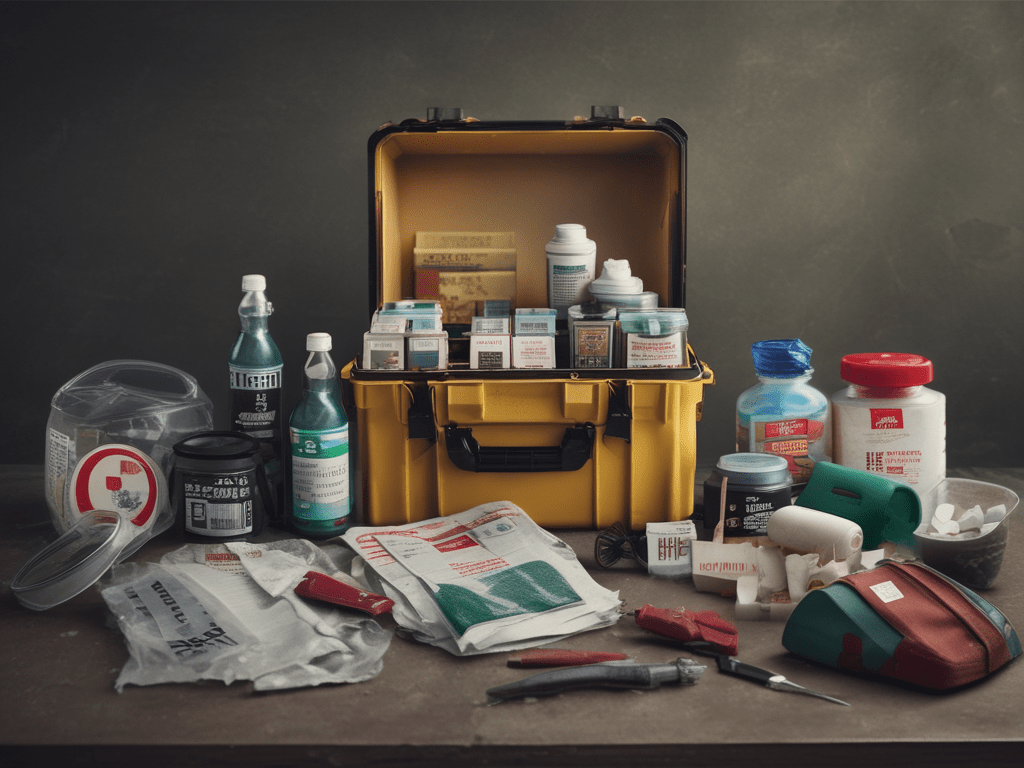
Create an emergency preparedness plan.
As my regular readers know, preparedness is kinda my thing. I’ve done articles before on disaster preparedness, but today, I’m going to do another one for the algorithm. This will be a multi stage process to help you prepare for the most likely disaster in your area, and then expand your preparedness based on individual needs and factors.
Stage One: The Disaster
The single most important part of this process is picking realistic emergencies to prepare for. Live in an area with tornados? Perhaps earthquakes are more prominent. Or maybe wildfires are the disaster Nature most prefers in your neighborhood! It is essential to pick these wisely, because while there is overlap in all preparedness, individual disasters have unique specificity in what is required to stay safe (a tornado shelter in a wildfire is just an oven, after all).
Stage Two: Planning Outward
When you begin to develop a plan, I always start with a circle. In this circle, I put all of the most simple things that you can do to prepare for a disaster. Things like fire extinguishers, medical supplies, clean water reserves, etc.
In this category, you would designate emergency exits for yourself and your children, safe rooms for emergencies, and other minor logistical planning.
After this, you add a new ring around the first one, and add the next layer of complexity. So adding things like external cameras, building out a tornado shelter, installing a built in fire suppression system, generators, etc.
Stage Three: Expand The Radius
Step three is very similar to step two, but now we go outside the home. Your home is your castle, and that’s why it is important to set it up first. But when you’re not at home, emergency preparedness doesn’t end, it expands. Caring for things like your vehicle, your travel routes, and your workspace are essential to quality preparedness.
Two prime examples of this are knowing your area, and preparing a get home kit. In an emergency, roadways can be chaotic. We’ve seen regular instances of traffic congestion get pretty extensive, and in a situation where people aren’t thinking clearly, such as an emergency, this can make it difficult to get home. A Quick Look at a map can help you determine a safe path home that evades the dense traffic of main highways and roadways,
Secondly, the get home bag. While in the extreme survivalist culture, there is an emphasis on packing up and getting out, most of us don’t have the skill set to survive the great outdoors. Our home is shelter and security to an extent, and a much easier environment to survive in. So in the even t you are away from home, I recommend keeping some spare supplies in a bag in your car. This “get home bag” should have food, water, some light medical supplies, and a few tools to help you on your way.
In the event that your car breaks down in an emergency, you can’t always rely on the availability of tow trucks and friendly neighbors to help you fix it, so when danger is close, grab your bag, anything important in the car, and get to stepping. Follow your pre planned route, and make sure to share it with the people involved in your emergency planning, so they have a route to look for you if needed. Only diverge from this path in the case of danger, and try to meet back up to it as soon as possible.
Stage Four: TEST the Plan
Now, it’s time for a dry run. Get your family together and test your plan for each emergency. Walk them through it, explain what you are doing and why you are doing it, and ensure that each person knows their role.
As you go through this process, you will find points of failure in your process. Fill in these gaps to ensure a quality plan that will work when you need it to.
Summary
This is a rough guide for the beginner. Ultimately, taking time to understand your circumstances, tools, medical supplies, and local resources will help you develop your plan better, but ultimately, this gets you started. It’s important to consider your physical abilities as part of any emergency plan to ensure it’s best success, as your physical health will determine certain factors in preparation.
Be safe, be prepared, and be GOOD.
 modernsurvivalarkansas.com
I’d honestly change stage one to “learn”.
I grew up half in the city, half in the country (the latter being 50% farm, 50% wilderness).
You’d be surprised how many people can’t do the basics like starting a fire or filtering water. Sure, they’ve seen the TV survival shows, so they know exactly how it works. Then you watch then start a fire with a steel and ferro rod and get so bored after 30 minutes you either do it for them or go set up a camp elsewhere.
So at the very least, everyone with an interest in this should learn the basics before they’re put under the pressure of having to do it for real.
Need practice? Have a BBQ started with wood and a fire steel, flint, lens, fire bow or whatever else. The more it’s done, the easier it becomes. But that’s just a small part of it.
Everyone can buy the multi-tool combined axe, shovel, saw, compass. But it everything collapsed around them, they’d be very quickly horrified to learn that the hollowed out handle that serves as a basis for most of those tools is more a liability than anything.
And don’t even get me started on the additional gimmick of a bottle opener.
But that’s just my perspective.
LikeLiked by 1 person
While I agree with you, this post is directed more toward common household emergency preparedness than wilderness survival. Most people simply will not need to start a fire with a ferro rod in a household emergency, but having a good medical kit does make sense. When you’re getting into the details, having ferro rods and the skills to use them is great as a backup or if you’re on the road. With water filtration, it makes more sense for someone to simply buy a water filter system if they have issues with their water frequently, or simply picking up some water bottles to store.
While the ferro rod/firesteel/fresnel lens/ bow drill might be a basic wilderness survival skill, I consider it a more advanced home preparedness skill, because if you’ve reached the point of needing that in your home, things have gone seriously wrong.
And yes, avoiding the garbage gimmicky survivalist crap you get on Amazon for 20$ should be avoided like the plague.
LikeLike